Introducing the new Online Database: Artists of Atelier 17
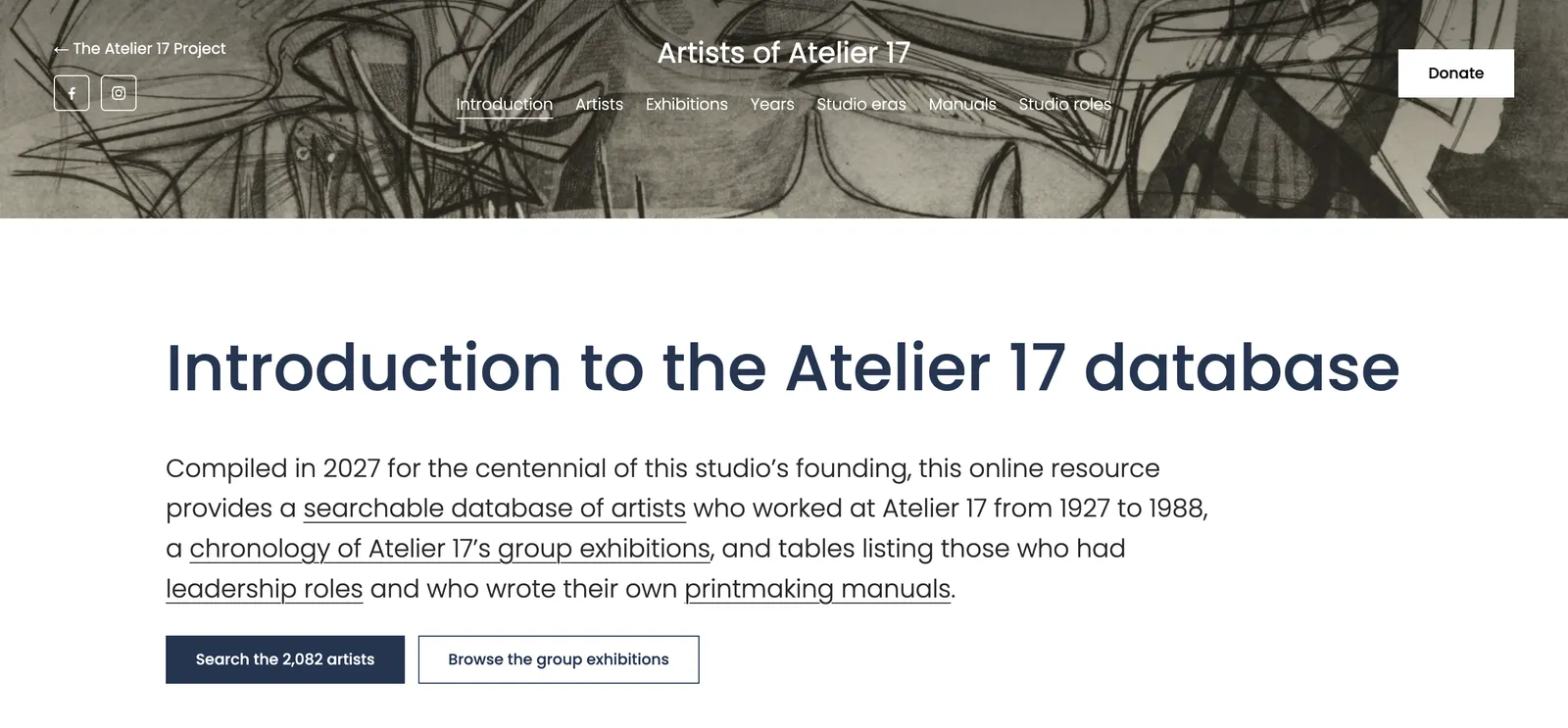
We are very excited to announce the launch of a new online resource, Artists of Atelier 17. This free, searchable database consolidates information about the artists who worked at Atelier 17 from its founding in 1927 to its closing in 1988.
The new database has a long genealogy. There are no comprehensive lists for the studio’s prewar years and its New York period. Peter Grippe maintained a ledger book when he was director of the New York studio (1952–1954). Joann Moser assembled the first list of Atelier 17’s members for her dissertation (1976), and this list of 709 names was first published in the catalogue for the workshop’s fiftieth-anniversary exhibition in 1977. From 2003, J. Michael Armentrout hosted Moser’s list, with some additions, on atelier17.com. Christina Weyl’s The Women of Atelier 17 (2019) added forty-six newly identified members from the New York years; Weyl’s companion website includes short biographies of these women artists.
In 2023, The Atelier 17 Project became aware of an account book among the papers of Stanley William Hayter at Tate Archive in London. The account book’s pages record the fees that individuals paid to access the workshop between 1951 and 1988 and, as such, offer an unprecedented snapshot of the postwar workshop.
Yet it is an imperfect and challenging document: Hayter’s handwriting is difficult to decipher; he typically noted only artists’ surnames, adding first names or initials in cases of married couples or if two artists shared surnames; and often he spelled phonetically or inconsistently across the years. Furthermore, artists who came to Atelier 17 via grants from the French government usually do not appear by name; instead, their presence is captured in a lump sum the government paid to Atelier 17 for all boursiers, or scholarship holders. The anonymity of the boursiers is particularly problematic when accounting for artists from nations in East and Southeast Asia.
With the help of research assistants, former workshop members, and other dedicated colleagues, The Atelier 17 Project transcribed the names in the account book. Through crowdsourcing and further analysis from Anthropic’s Claude, we identified approximately 1000 artists not previously noted on Atelier 17’s postwar roster. We have positive matches for just over 500 and added the balance only by their surnames.
For Atelier 17’s centennial, The Atelier 17 Project merged all lists (Moser, Armentrout, Weyl, Grippe ledger, Tate Archive account book) and migrated the data to Airtable. This database includes names added through archival research in exhibition catalogues, artists’ papers, newspaper clippings, and direct contact from artists or their families. Several generous colleagues contributed their knowledge by enriching this dataset and filling in missing details.
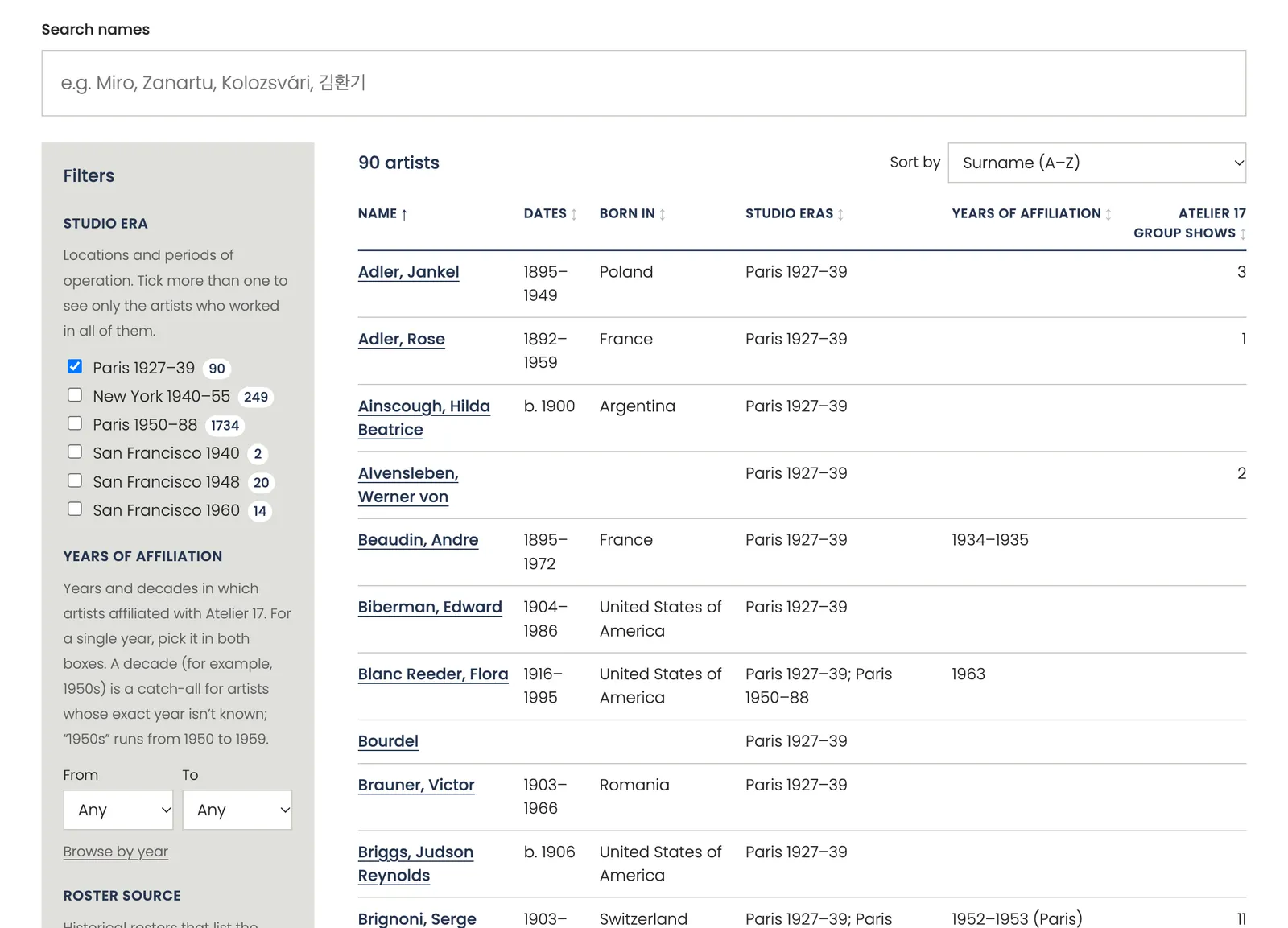
The new database is a work in progress that will grow and change as more information becomes available. Readers who can identify an artist, correct a name, or supply a missing detail are warmly invited to get in touch.
We are grateful to everyone who contributed to this project, especially Jiyoung Lee, Evangeline Mann, Anthony Quinn, Mike Russo, Ming Tiampo, and Elizabeth Tran, who helped transcribe the account book, and the many colleagues credited in the database’s introduction.